How a podiatry center in Kazan rebuilt its website around demand and appointments

This was not a “magic SEO trick” story. It was a full rebuild of structure, service pages, supporting content, and appointment paths for a local medical project.

Podiatry and medical services

A project where trust, local relevance, and the quality of landing pages directly affect lead flow.

Kazan

A local SERP where it is not enough to be visible. The site has to move a visitor to an appointment quickly.

A stronger path from search to inquiry

The site gained stronger local visibility, more precise demand-focused landing pages, and a better path from organic traffic to inquiries.

About the project

  • Client: PodoCenter podiatry clinic.
  • Niche: podiatry and related medical services.
  • Region: Kazan.
  • Starting point: the site was already live, but organic traffic did not convert into a stable flow of inquiries for priority services.

Starting point and goals

What was holding the project back

  • Part of the demand was trapped on broad pages without a dedicated landing page for the actual intent.
  • For several services, the site looked weaker than local competitors in the Kazan SERP.
  • The informational layer was poorly connected to services and to the appointment path.
  • Commercial trust signals did not reduce anxiety enough: the path to contact was not clear.
  • Organic traffic was arriving, but too often it stopped before the user reached an appointment.

What the project needed

  • Expand demand coverage across service-driven and symptom-driven queries.
  • Strengthen local visibility in Kazan for priority clusters.
  • Build a clearer path from search to appointment.
  • Reduce dependence on broad traffic and improve the quality of inquiries from organic search.
  • Create stronger landing pages for key services instead of relying mostly on the homepage.

Not a set of micro-fixes, but a rebuild around local demand

Growth appeared because structure, landing pages, trust signals, and the technical layer started working together instead of in isolation.

Demand was mapped by patient scenarios, not by a loose keyword list

The work started not from a generic keyword dump, but from real intents: when a person is already searching for an appointment, when they are still comparing options, and when they enter through a symptom or a question.

That clustering made it clear where a dedicated service page was needed and where an article, FAQ, or supporting page would do a better job. It removed a common local SEO mistake: pushing too many different formulations onto one weak page.
The site structure was rebuilt around commercial demand, not around a general showcase

The service layer was strengthened and tied directly to local demand in Kazan. That mattered more than endlessly expanding the blog or adding broad descriptive texts about podiatry.

The goal was simple: a person should land on a page where the problem, the service, the difference in approach, and the next step are all obvious without extra wandering.

Priority service landing pages were repackaged

The main service pages were rebuilt so they solved two tasks at once: being understandable for search engines and lowering friction before an appointment.

The focus was not on volume for volume’s sake. Each page had to answer the practical question: is this service right for me now, and what do I do next if it is?

The blog became a working layer instead of decorative background

The blog was used as an early-demand entry point. Some users do not start with an appointment query. They begin with a symptom, a concern, or a comparison of treatment options.

Those materials gave the project more useful entry points and then moved readers toward the relevant service page. In medical and adjacent niches, that trust-building step is often critical before conversion.

Commercial blocks and the appointment route were strengthened

A separate layer of work went into contacts, specialist presentation, trust blocks, and the overall path to a lead. The page had to answer the basic doubts that prevent an inquiry.

For a local medical project, this is never secondary. People may see the right service in search, but still hesitate if the site does not make the next step feel clear and safe.

The technical foundation was aligned into one system

In parallel, the core SEO layer was cleaned up: headings, internal linking, metadata, indexation logic, and the overall search-ready structure of the site.

That made sure useful pages were not isolated. For local SEO, strong services, supporting content, and trust pages have to work as one connected system rather than as separate sections.

Screenshots of traffic, visibility, and inquiry growth

These are real screenshots from the project. They show how performance changed after the site structure and landing pages were rebuilt.

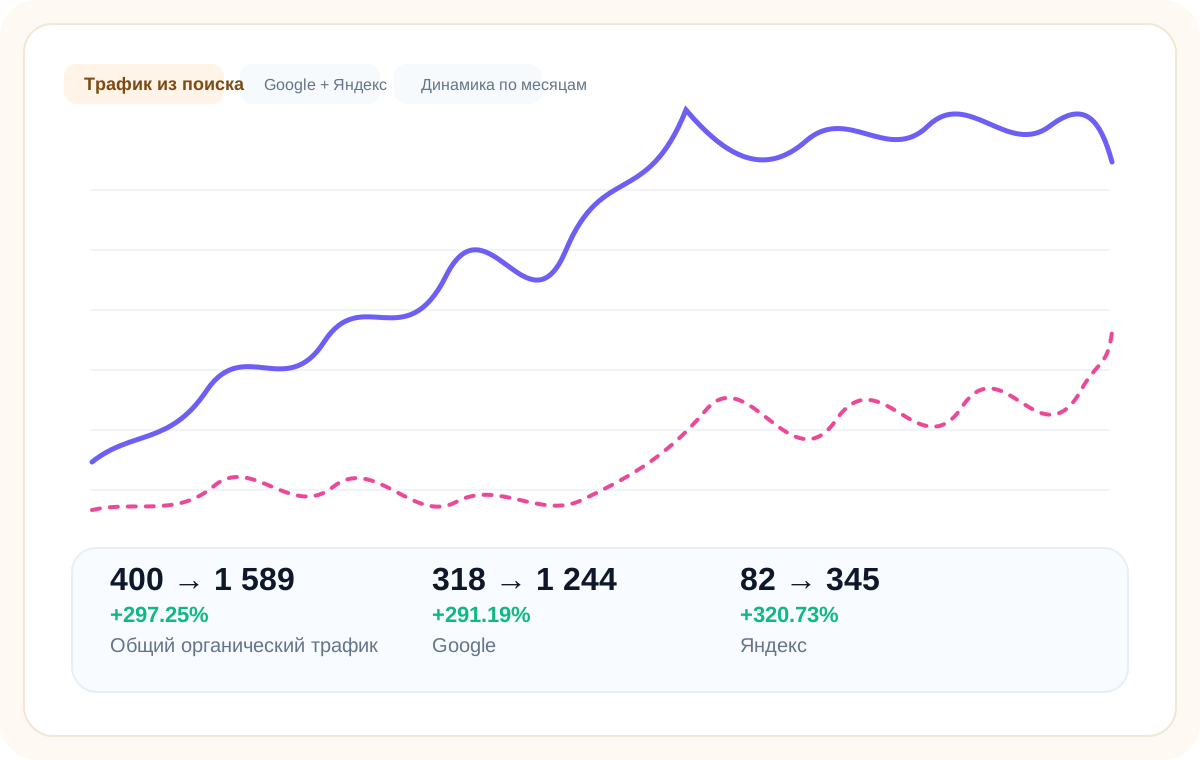
PodoCenter search traffic growth

Search visits grew after the service structure and priority landing pages were strengthened for local demand.

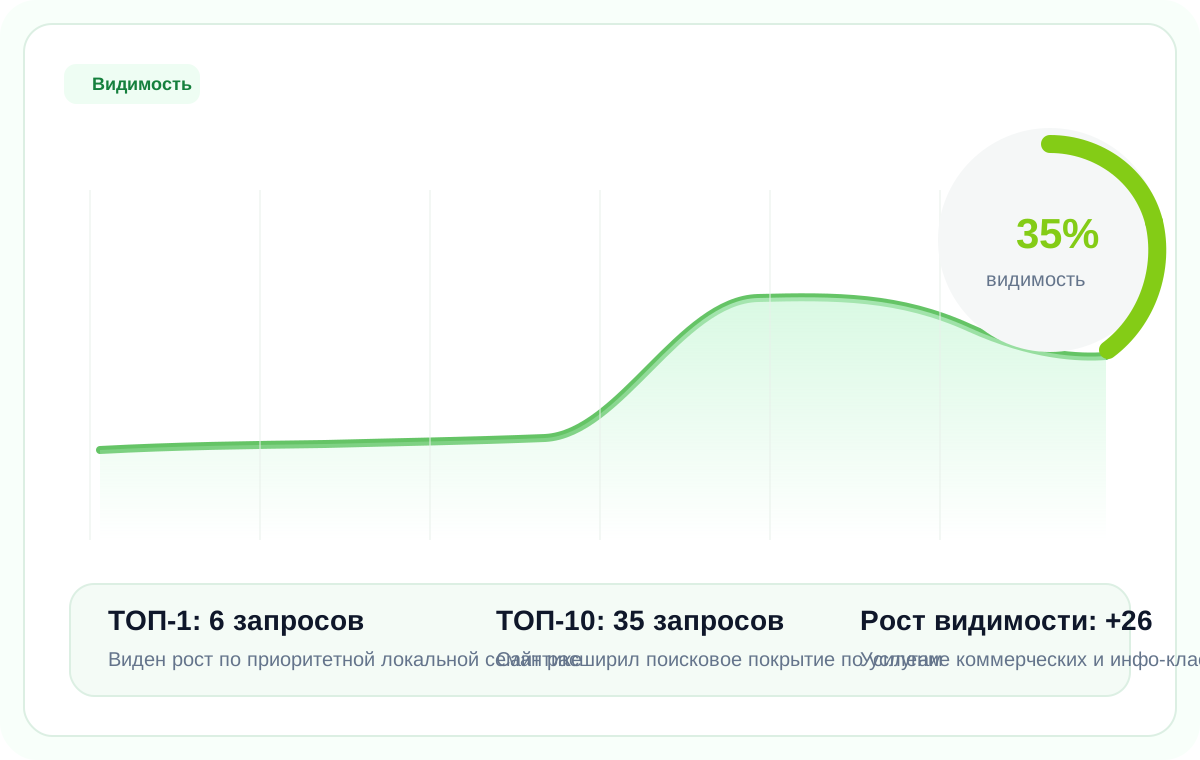
PodoCenter visibility growth in Kazan

Local visibility in Kazan improved most strongly for service clusters that are closest to an appointment.

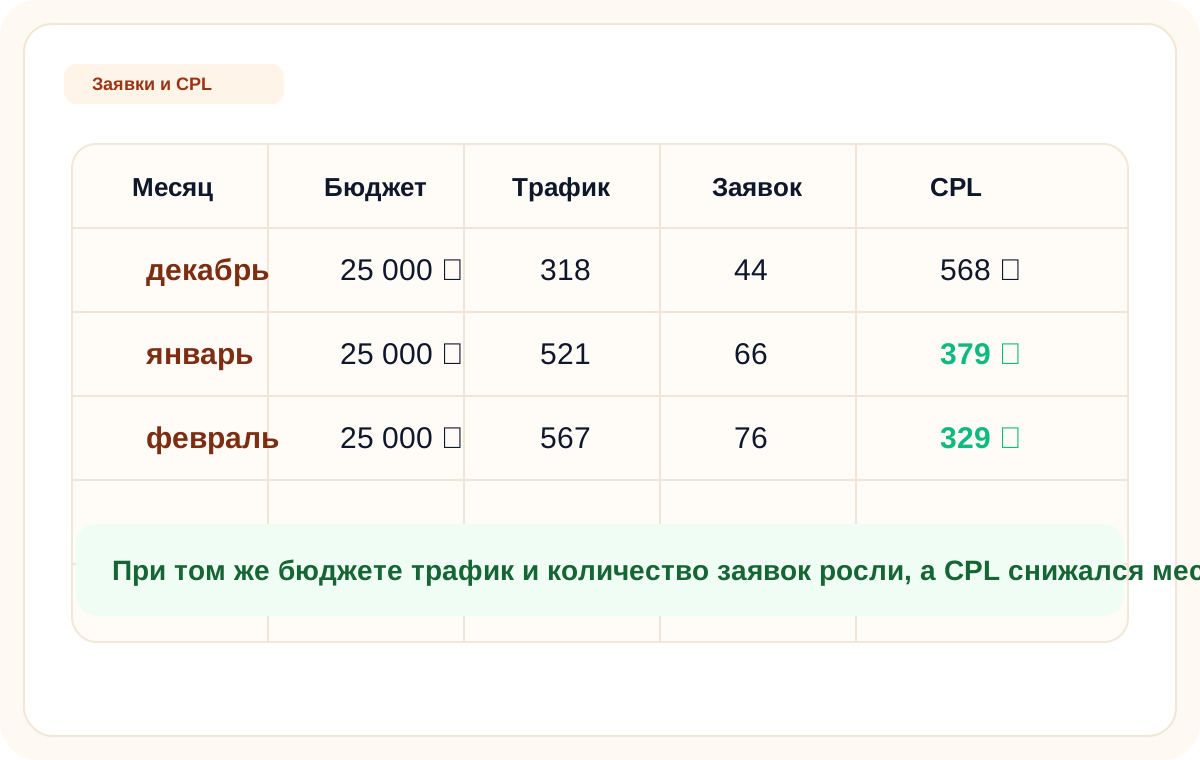
Lead dynamics for the project

Organic traffic started to convert not only into visits, but into real inquiries for the clinic.

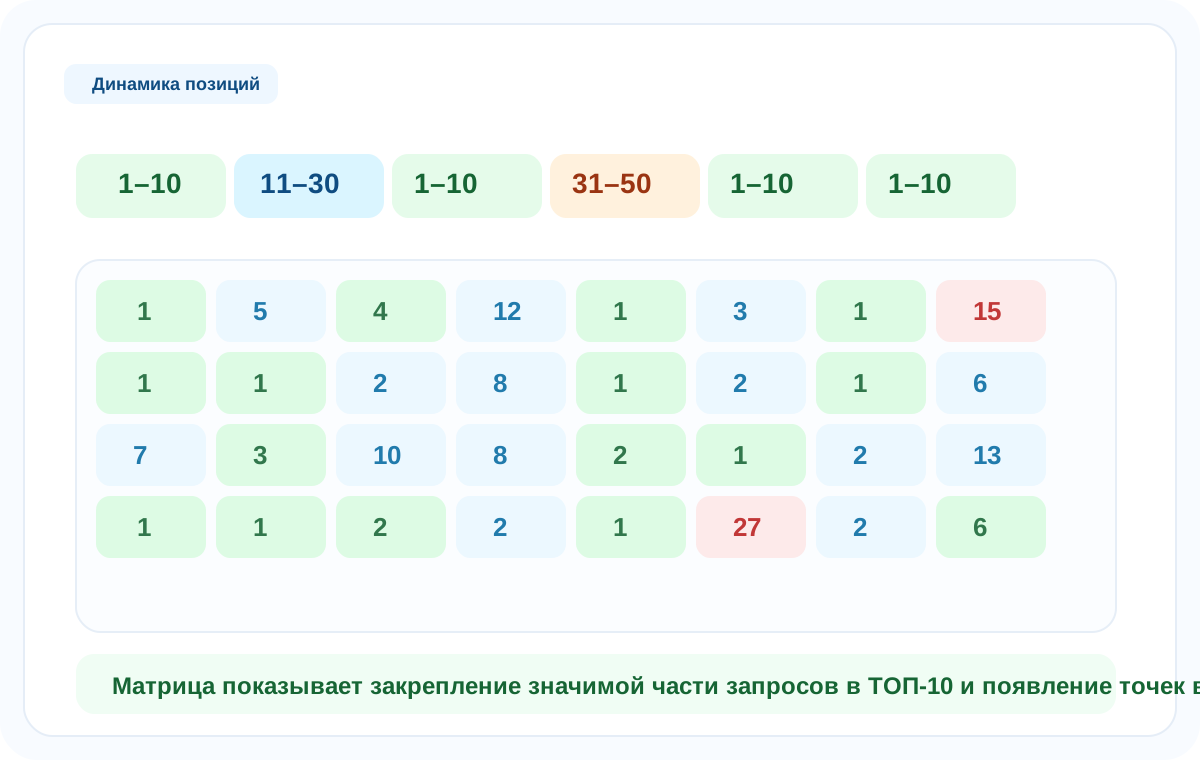
PodoCenter ranking heatmap

The ranking matrix shows stronger positions for priority services and a more stable local presence.

What created the result in this case

Demand was split by intent instead of being blurred across broad pages.
Services, blog content, and trust blocks were connected into one route instead of living in separate silos.
Commercial factors were strengthened exactly where organic demand was landing.
Technical SEO and content work moved together, so growth was not blocked by one neglected layer.

What similar local projects can borrow from this case

This case is useful because it shows the working logic of local SEO for services. Growth did not come from one “hack”, but from the connection between demand, structure, landing pages, supporting content, and the path to an inquiry.

Common questions about the case and the strategy

Why does a podiatry center need both service pages and articles?

Because part of the demand starts earlier than an appointment query. Articles help capture symptom-driven intent, explain the situation, and then move a person toward the relevant service page.

What affects local SEO most in this type of niche?

Usually it is the combination of dedicated service pages, local relevance, commercial trust signals, and a stable technical foundation. One isolated fix rarely creates a durable result.

Can a project grow without a large blog?

Yes, if the main service pages already cover demand well. But in a competitive niche, supporting content often creates extra entry points and builds trust before the appointment step.

What should be checked if traffic exists but leads remain weak?

Then the issue is usually not only SEO. You have to review landing pages, offer clarity, commercial blocks, and the overall route to an inquiry. Traffic without a clear next step will stall.

What can strengthen a similar project

Need growth in search and inquiries, not just a report?

I will review the site, show weak points in structure, content, and commercial blocks, and turn that into a clear plan for your region and demand.

Reply within one business day
No pressure and no hard sell
Immediate growth points for SEO, structure, and leads