


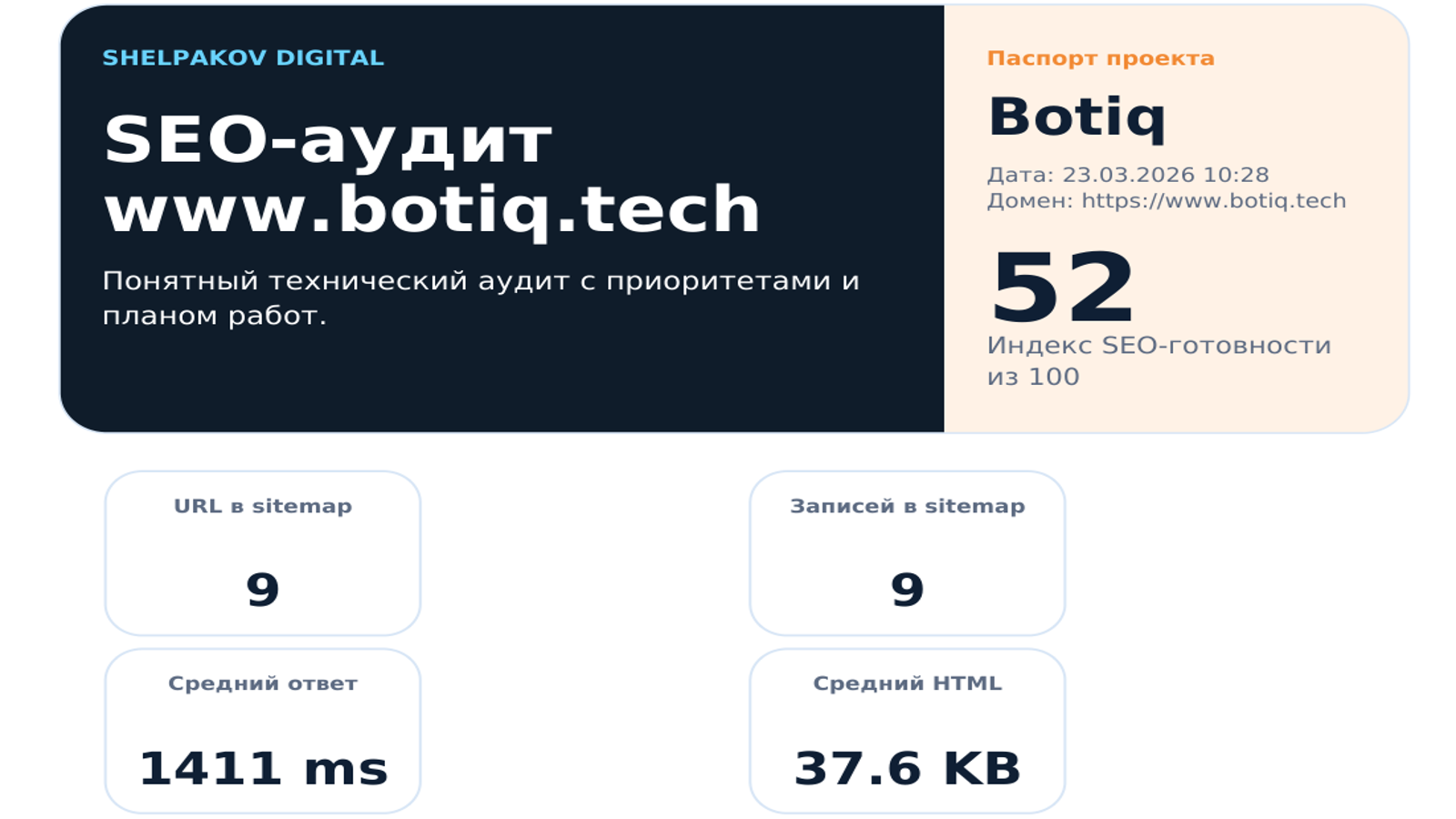
Botiq is a partner-focused SaaS project. The goal of the SEO audit was not to produce a decorative presentation, but to give the team a practical document for development, content, and SEO decisions.
At the start, the project needed clear answers to three questions: which parts of the site were already assembled well, which templates were slowing growth, and what should be implemented first without scattering the team.
What the audit covered
- Indexation and crawl review: robots.txt, sitemap, canonical logic, and general search hygiene.
- Site architecture, internal linking, and the quality of key templates.
- Title, description, H1, content framing, image handling, and schema markup.
- Commercial pages, contact zones, forms, and core conversion entry points.
- Competitor gap analysis translated into concrete implementation tasks.
- A roadmap split into quick wins, medium-term fixes, and staged priorities.
What the audit showed
The project already had a workable base, but the SEO and conversion layer was uneven. That is common for SaaS sites: the product evolves faster than templates, metadata, structured data, and commercial routing.
- The project had a solid product core, but not every important template had an equally strong search-ready presentation.
- Canonical logic, structured data, and metadata consistency still needed work.
- Some pages existed, but looked weaker than they should from both an SEO and conversion perspective.
- Commercial entry points and contact zones were present, but not yet convincing enough for demand capture.
What went into the first priorities
- Turn contact and inquiry pages into full commercial landing pages instead of technical endpoints.
- Rebuild title, description, H1, and canonical patterns across the main template types.
- Add valid schema where it actually helps search engines understand the page entity.
- Strengthen commercial pages with FAQ, proof blocks, and decision-supporting content.
- Make conversion points more visible on pages where users are already close to a decision.
- Use competitor gap analysis as a source of tasks, not as a passive comparison sheet.
What the team received
The output was not a long list of disconnected remarks. It was an implementation map with quick fixes, template-level improvements, and staged priorities that could be put into work without creating chaos inside the product team.
That is especially important for SaaS. The value of the audit was not its length, but the fact that it gave the team a decision-making framework: what to do now, what to delay, and where SEO and conversion issues intersect.
Why this case matters
This is not a story about a “magic growth jump after an audit”. It is a good example of how an SEO audit helps structure work on a complex product site with templates, technical debt, and multiple conversion scenarios.
If you need a similar breakdown for a project with template sprawl, technical compromises, and unclear SEO priorities, the closest service is SEO audit.
Result screenshots and project materials
Open any screen in a larger view and inspect the details calmly.
Need a similar result for your website?
I will break the task down, show where the site is losing potential, and outline the most sensible starting point so SEO and site structure support leads, not just visibility.